Choosing a design
Designing a mosaic can feel overwhelming. If you don’t have an original design in mind, it is worth perusing some magazines to see what catches your eye. Tear out anything you like the look or feel of, and sooner or later you will notice a common theme, which you can base your design on. Stencil books are helpful in the beginning as they provide clear outlines and shapes to follow. Even if the image is small, you can enlarge it via printing or photocopying until it is a suitable size.
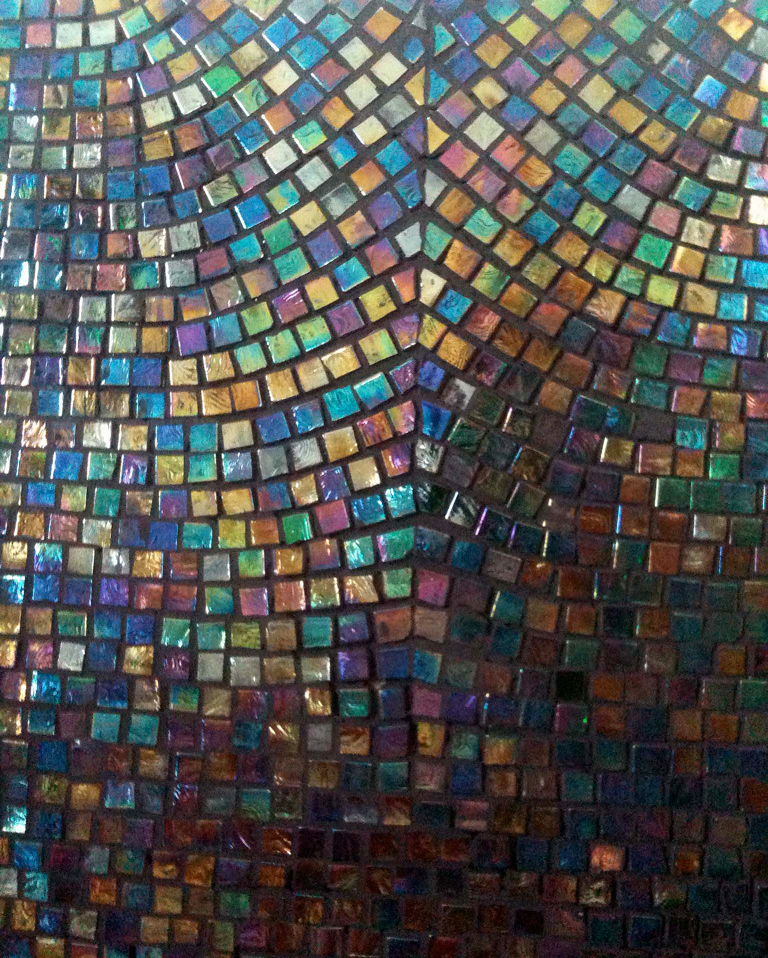
Glass mosaic 1 ft x 2 ft in iridescent glass
It is important that the design not be too intricate to start with – aim to create a mosaic with a flow and feel which works with the size of the materials you are using. You can use a specific ‘cartoon’ which is a design you have enlarged, or have a more freeform approach. One material can be cut into different shapes to create contrast. The mosaic featured here creates a 3D visual effect although in reality it is a flat surface.
Mosaic embraces the qualities inherent in the colour variation and textures of stone, pebbles, glass and ceramic; it’s 3 dimensional and a different art from the preciseness and painting. Let your materials do the work – the finished product is always more beautiful than the initial drawing!
Surface preparation is key
The surface should be prepared according to the materials you are using to create the mosaic, the location of the mosaic and the nature of the surface itself. As a general guide, any wood surface should be hardwood (e.g. Plywood) not softwood, and it is best practice to brush over the wood with slightly watered down PVA (approximately 3 parts PVA to 1 part water) and let it dry prior to starting the mosaic.
Over a wooden floor: Nail sheets 2/3 inch Plywood over the subfloor, ensuring you eliminate any flex in the floor, then PVA wash. The ideal surface for floor and wall mosaics is actually tile, or cement backer board which is available at bigger hardware depots. It is sold in 8ft x 4ft sheets, but is easily cut to whatever size you like and requires no further preparation.
Over a concrete floor: You can mosaic directly onto such a floor. However, I would unibond first as an added adhesion precaution. Floor mosaics should be installed using a flexi cement based adhesive. For light coloured mosaic use white adhesive, not the standard grey as it may discolour certain stone.
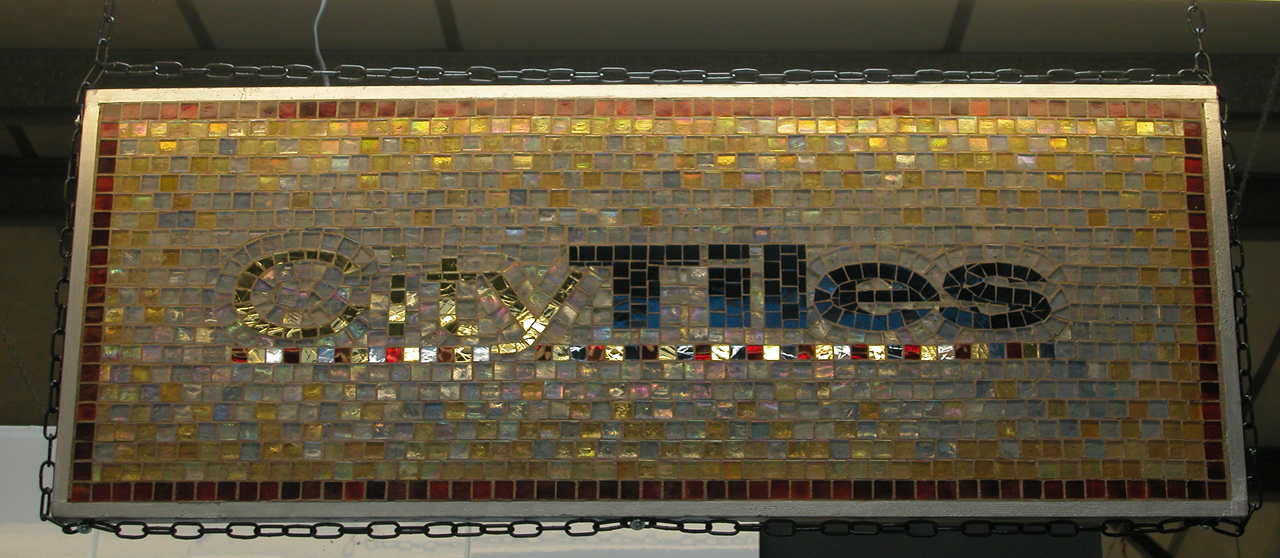 Glass: Glass should be installed as per the manufacturers instructions. This usually means a latex additive should be added to the cement to increase the bond, due to the non-porous nature of glass. If the mosaic is small, and non-functional such as an art piece which will hang on a wall, I will use undiluted pva to glue the pieces individually directly onto the surface, as in this mosaic.
Executing your design
Think of your mosaic as your own jigsaw puzzle, the difference being that you can cut the pieces to make them fit! If I am making a mosaic has pieces of different depths but which requires a flat surface, such as a table, I use the indirect method – make it face-down and ‘flip it’ once complete. I would caution against it at first as it takes some practice. Please contact me if you have any questions regarding this technique.
To start with, it’s simplest to use the direct method and select materials which are of uniform depth, such as the glass for this mosaic – it can take time to experiment with the look of the mosaic, especially if it’s quite detailed and it’s helpful to see it ‘right way up’ while making it.


Or depending on what materials you have available you may want to experiment with the texture which results from mixing depths.

This fireplace mouth was created using byzantine glass, pebbles and ceramic which all vary in depth, but contribute to the tactile nature of this mosaic in the master bedroom of a private residence opening out onto Malibu beach.
It can minimise problems if you use the appropriate size pieces to suit the size of mosaic.
Cutting
Invest in some good quality nippers, with carbide tips. When nipping, place the nippers at the edge and press down – there is no need to try and cut by placing them in the centre as this takes a lot of unnecessary force. Experiment with different materials as they will respond to different nipping techniques – porcelain is REALLY hard, as it is fired at a far higher temperature to ceramic; it is best to smash porcelain with a ball peen hammer (while wearing safety glasses!) and mix it with ceramic which is nip friendly.
Glass tile and mirror can be shattered by hitting with a ballpeen hammer (while wearing safety glasses!) on the front side. You WILL get cut anyway so please be ultra careful. A cut on the hands is par for the course. Don’t chance a glass splinter in your eye. The mosaic below consists of byzantine, frosted and clear glass tile. Having bled for your art is a literal feature of such projects.
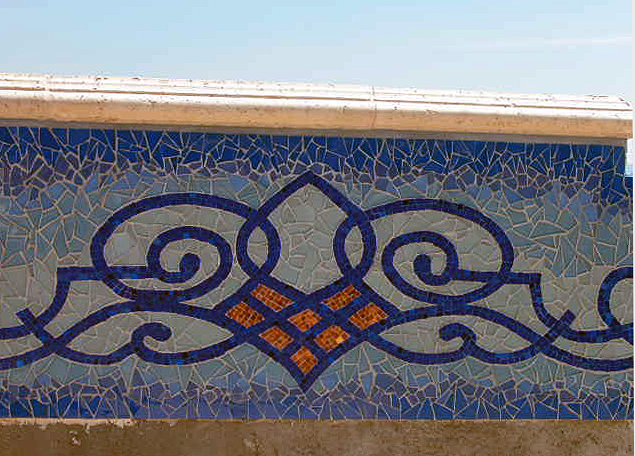
Detail of Byzantine pool mosaic
The sharpest edges of mirror or glass can be ground off via a glass grinder, which is a necessary precaution when creating a mosaic which someone will touch, such as this infinity pool.
Ceramic and porcelain can also have sharp edges, as tiles are literally ground glass fired onto a clay/porcelain base.
Glass can also be nipped effectively with wheeled nippers – I think Leponitt are the best. You can even invest in a wet tile cutter if you are creating a larger mosaic – it allows you to cut tile/marble into mosaic pieces, saving your hands from excessive nipping while preserving the ‘handmade’ feel.
Finishing
Glass is traditionally left ungrouted. Tile and ceramic can be grouted in a single color, or you can mix acrylic paint into white grout which will give you a range of colours to use on different sections of the mosaic.
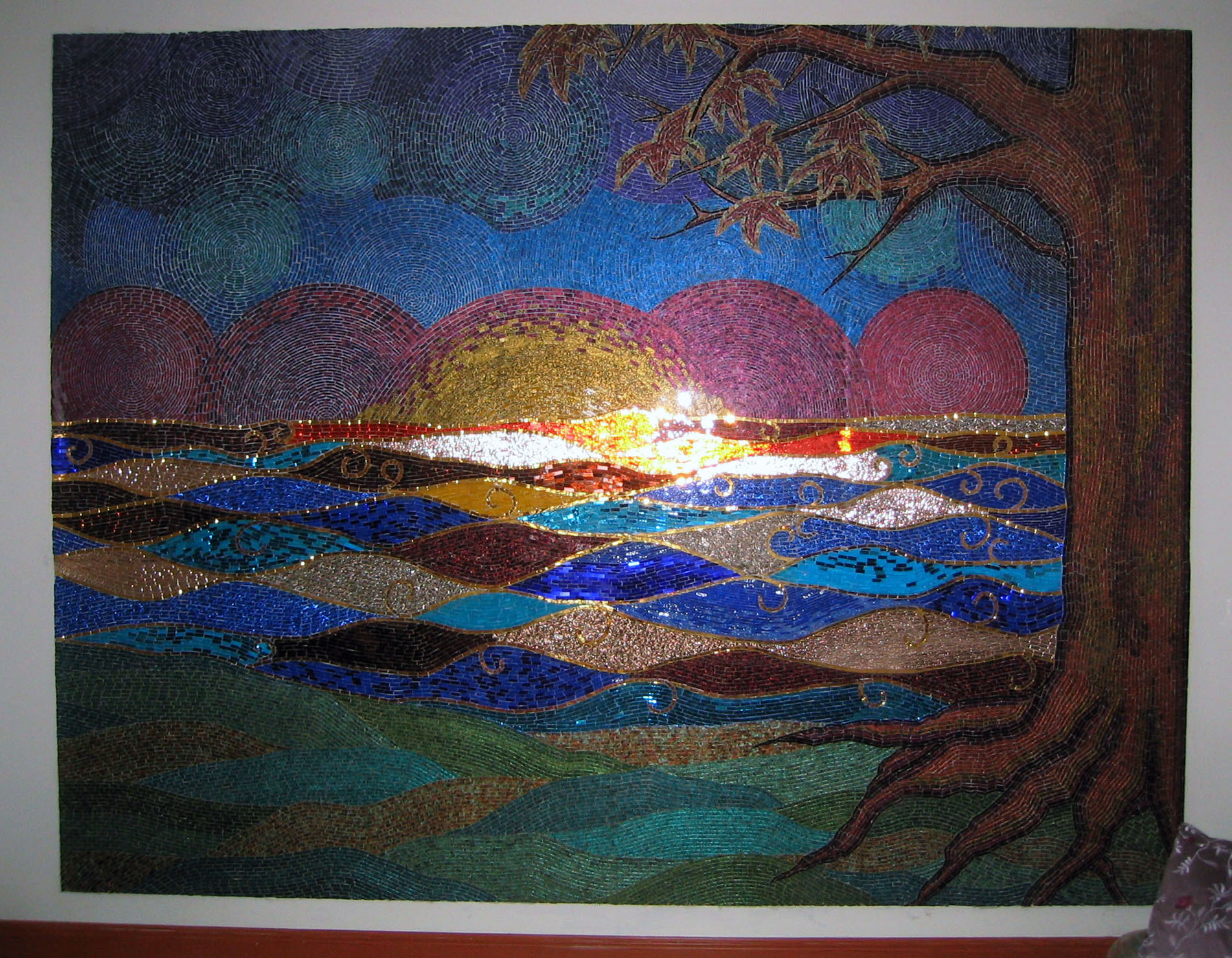
Glass mosaic mural 6 ft x 8 ft in Malibu California
A technique similar to this was used on this mosaic mural, which was to mix the acrylic paint in with a penetrating sealer, resulting in a more subtle effect while intensifying the colour. (yes glass is traditionally ungrouted – but on large installations such as this, for seamless joins needs must)
A penetrating sealer usually provides protection for cement, marble and tile. As maintenance I would advise resealing the table every 6 months with a clear, penetrating sealer. I would not go so far as to guarantee non- staining, but my tables have been in restaurants and homes for over 8 years, and I have never had a client report an instance of staining occurring. For added sheen, applying Briwax every couple of weeks is an effective measure; particularly over cement. 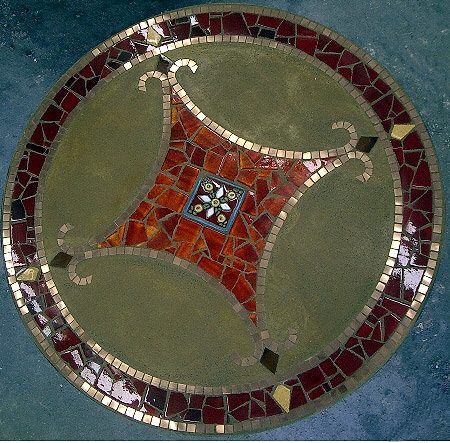
 deconstructedmosaic